Category Archives: Cook – Recipes from Friends

Helen Chen’s Curry Coconut Pumpkin Soup

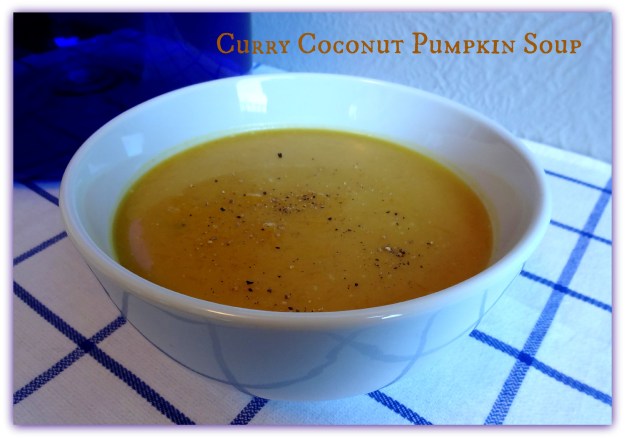
Curry Coconut Pumpkin Soup

Curry Coconut Pumpkin Soup. Bowl and check patterned bistro towel, from HIC.

Our friend Helen Chen, widely acknowledged expert in Chinese cooking, teacher, and cookbook author, has shared a perfect fall recipe with us – her Easy Curry Coconut Pumpkin Soup. Rich and satisfying, it pairs perfectly with crunchy bread (if you’re thinking of baking your own, check out Rose Levy Beranbaum’s guide to the secret of great bread) and is hearty and delightful all on it’s own. We’re offering options – make the original, quick and delicious recipe from Helen, or take advantage of your local markets’ bounty of winter squash, and use fresh pumpkin in our modified vegetarian recipe based on Helen’s classic. (Scroll down.)

This creamy soup blends flavors and aromas that belie its short list of ingredients. Curry paste varies in spiciness so if you’re not familiar with it, start with a couple of teaspoons and add more to taste. If you can’t find curry paste in your local market, curry powder will do also.

Helen Chen’s Original Easy Curry Coconut Pumpkin Soup Recipe

Ingredients:

  • 1  (15 oz.) can pumpkin
  • 1  (13.5 oz.) can unsweetened coconut milk
  • 2  (14.5 oz.) cans chicken broth
  • 2 to 5 tsp. red curry paste, or to taste
  • 1/2 tsp. garlic powder
  • 1/2 tsp. grated peeled ginger or ginger powder
  • 2 tbls. light brown sugar
  • 1/2 tsp. salt, or to taste
  • 2 pinches freshly ground black pepper

Combine the pumpkin and coconut milk in the stovetop clay casserole. Stir until well blended. Add the chicken broth a can at a time, stirring in between each addition to insure a smooth texture. Place the casserole over medium heat.

Stir in the curry paste, garlic powder, ginger, and sugar. Bring to a boil, reduce heat and simmer for a few minutes to develop the flavors.  Add the salt and pepper. Taste and correct seasoning as desired. Serves 6 to 8

Copyright © 2009 by Helen Chen. All rights reserved.
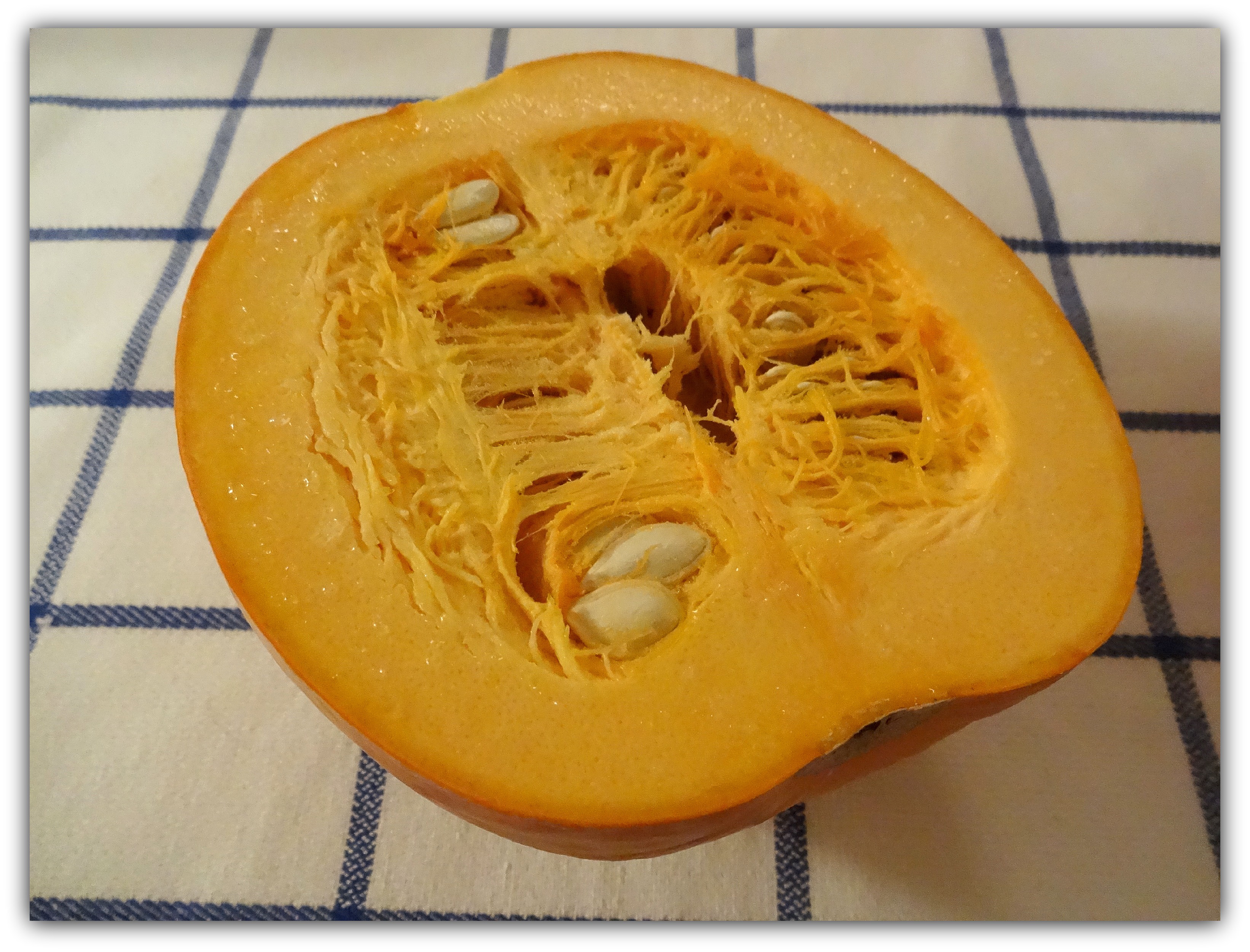
Pie pumpkin, about 7 inches in diameter, raw

Pie pumpkin, about 7 inches in diameter, raw

Curry Coconut Pumpkin Soup -Vegetarian Version. Modified from Helen Chen’s Original Recipe (Above)

Ingredients:

  • 1 pie pumpkin, about 7-9 inches in diameter, to produce 2 cups cooked pumpkin puree. This varietal is smaller than the size used for jack-o-lanterns, and less grainy in texture. Look for one that is bright orange, with no bruises.
  • 1 can (13.5oz) unsweetened light coconut milk
  • 2 cups vegetable broth
  • 2- 5 tsp. red curry paste, or to taste, or 5 tsp. curry powder, or to taste
  • 1/2  tsp. garlic powder
  • 1/2 tsp. grated peeled ginger or ginger powder
  • 1 – 2 tsp. coarse sea salt; start with 1 tsp. and add slowly, up to 2 tsp., to taste
  • 1 tsp. freshly ground black pepper

To prepare the cooked pumpkin puree: First wash the pie pumpkin, and slice in half.  Scrape the seeds and stringy pulp from the inside, but don’t toss – you might want to save the seeds for roasting! (See: Roasted Pumpkin Seeds Recipe)
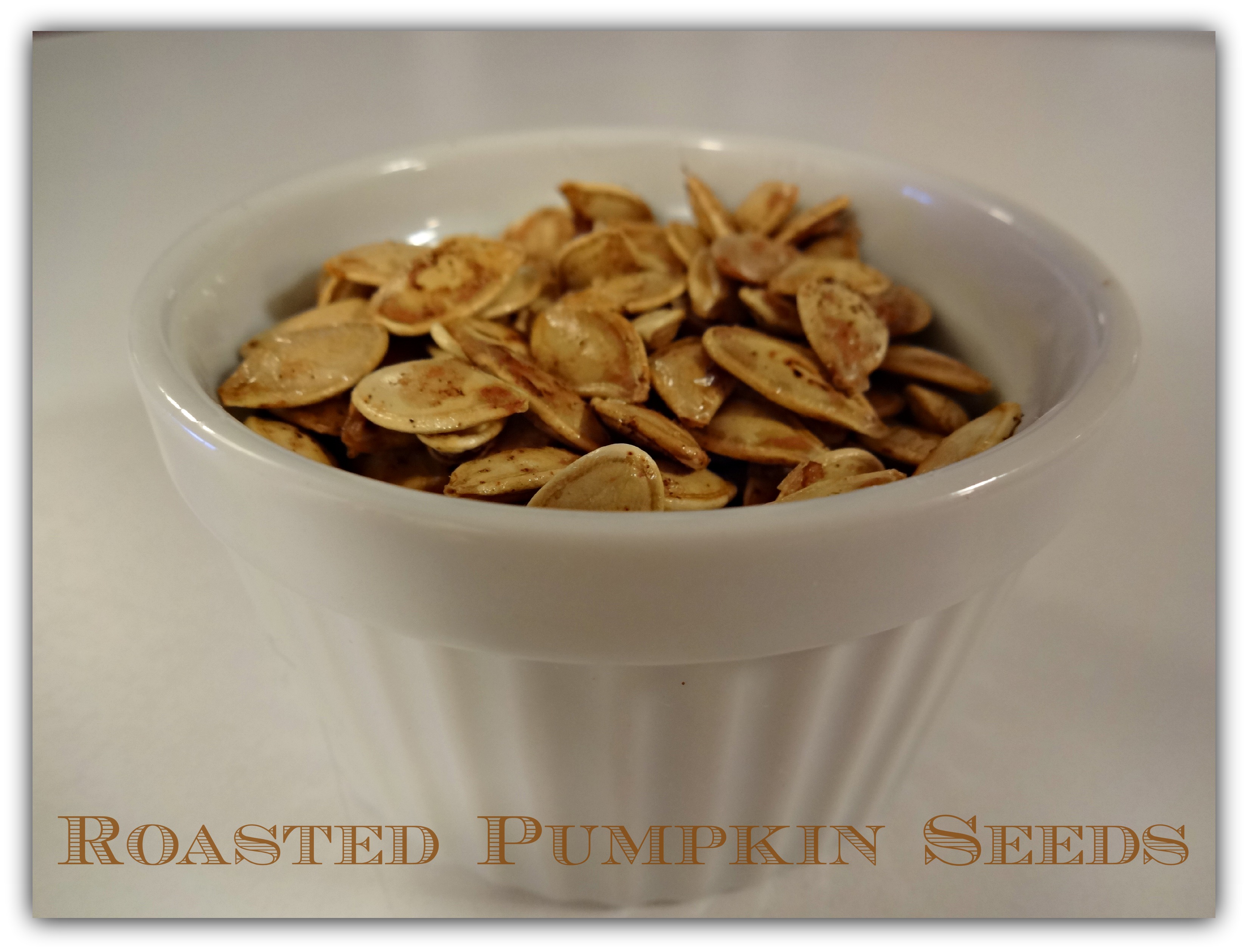
Roasted Pumpkin Seeds

Roasted Pumpkin Seeds

Place both halves face down in a baking dish with about 1/4 inch of water in the bottom. Bake at 350 degrees, for about 40 minutes. It will be ready when the flesh is very soft if pierced with a fork. After removing from the oven, let the halves cool until you can handle them. Then scoop the contents from the rind into a bowl. If you desire a smooth textured soup, process the cooked pumpkin in a food mill or food processor. If you opt for a chunkier soup, just spoon the cooked pumpkin from the rind, right into a measuring cup, and then add to your soup pot.

Combine 2 cups of the cooked pumpkin or pumpkin puree and coconut milk in a soup pot on the stove top, over low heat.  Stir until well blended.

Add the vegetable broth slowly, and stir consistently.  Increase heat to medium.

Stir in the curry paste or powder, garlic powder, and ginger.  Bring to a boil, then reduce heat and simmer for a few minutes to develop the flavors.  Add salt and pepper.  Taste and make adjustments to the seasoning as desired. If you use a coarse sea salt instead of the granulated version, you may find you need a bit more. Serves 4.

Just as we were about to post this, Helen kindly sent a note suggesting we might add a dollop of plain yogurt on top of the hot soup. Delicious. Thank you Helen, for the continuing education.

Contributed by Nicole H., of HIC
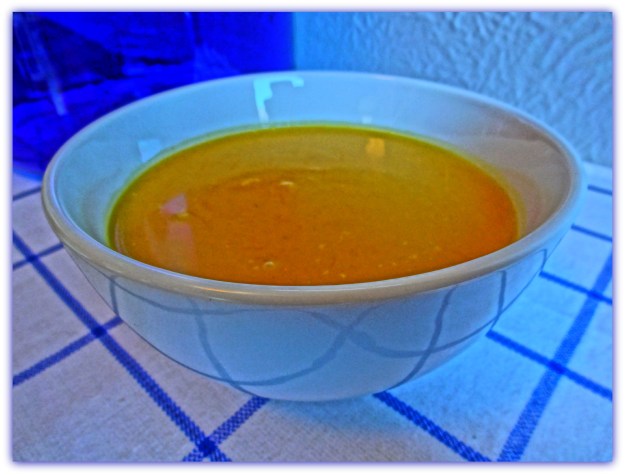
Curry Coconut Pumpkin Soup

Curry Coconut Pumpkin Soup

Biography of Helen Chen

Helen Chen

Helen Chen

Helen Chen is a widely acknowledged expert in Chinese cooking. Besides her role as an educator and cookbook author, she also is a product and business consultant to the housewares industry. In 2007 she created and developed a new line of Asian kitchenware under the brand name, “Helen’s Asian Kitchen,” expressly for Harold Import Company in New Jersey.

Having been born in China, and raised and educated in the United States, Helen brings the best of both worlds to her approach to the art of Chinese cuisine. She understands the needs of the American cook as only a native can, yet she is intimately knowledgeable with the culinary practices and philosophy of China.

Helen is the author of Helen Chen’s Chinese Home Cooking (Hearst Books,1994), Peking Cuisine (Orion Books,1997), Helen’s Asian Kitchen: Easy Chinese Stir-Fries (John Wiley & Sons, 2009) and Helen’s Asian Kitchen: Easy Asian Noodles (John Wiley & Sons, 2010). For more information, visit http://www.helensasiankitchen.com/

*Not affiliated with Joyce Chen products
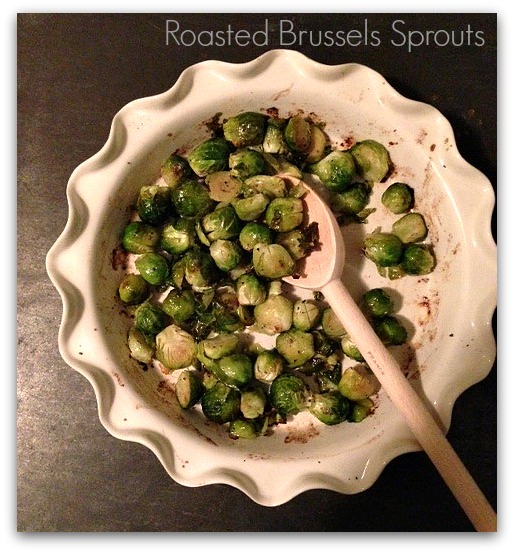
Roasted Brussels Sprouts with Truffle Oil

Roasted Brussels Sprouts with Truffle Oil

Roasted Brussels sprouts with truffle oil. Beechwood spoon, made in France, and Rose’s Perfect Pie Plate, both from HIC.

Brussels sprouts – The consistently controversial vegetable.  Most people fall into one of two camps here – you either love Brussels sprouts, or detest them. Whether it’s the smell, the texture, or the bad reputation they bear for being displeasing, many people just don’t embrace the Brussels sprout.  The technique used in this recipe was passed along from a good friend, who has converted many previously averse, to become embracers of the veggie. What’s different in this recipe? It’s all about changing the texture – We’ll roast both whole and sliced Brussels sprouts together, achieving a mix of softer whole sprouts, and crunchier sliced bits. Love pancetta and cheese? You’re covered. Just scroll down to the “Variations” section at the bottom of this post.

Roasted Brussels Sprouts with Truffle Oil Recipe

Ingredients

  • 1/2 pound Brussels sprouts, rinsed, ends trimmed, but left whole
  • 1/2 pound Brussels sprouts, rinsed, ends trimmmed, sliced
  • 2 tbsp. truffle oil
  • 1/2 tsp. Himalayan sea salt
  • Freshly ground black pepper

Tools

Step-by-Step Instructions

Preparing the Brussels sprouts

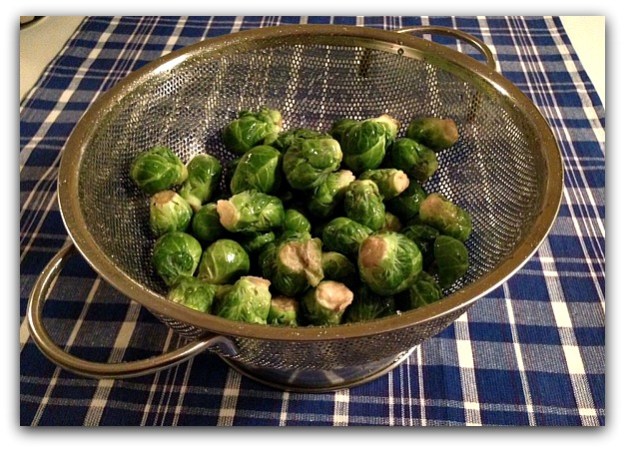
First, rinse well.

Brussels sprouts rinsed in collander

Brussels sprouts rinsed in collander

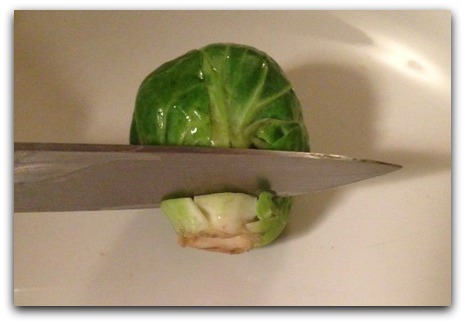
Trim the excess stem at the bottom.

Cutting Brussels Sprout Stem

Cutting the Brussels sprout stem

Then, pull the extra rougher leaves off from around the outside of the Brussels sprout.

Peeling Brussels Sprout Leaves

Peeling Brussels sprout leaves

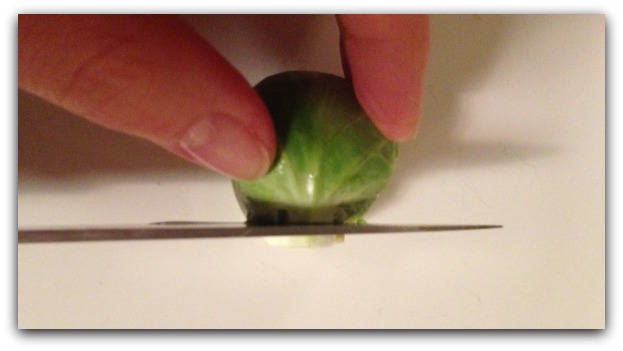
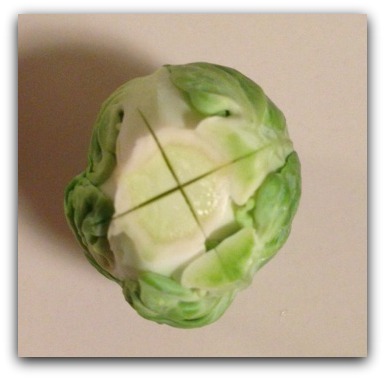
Trim the stem a bit closer, and create a notch in the bottom. The notch aids in more even cooking.

Trim Brussels Sprout Stem Closely

Trim the Brussels sprout stem closely

Brussels Spout with notch cut into the bottom

Brussels spout with notch cut into the bottom

For this recipe we’re mixing both whole and sliced Brussels sprouts, because the smaller sliced pieces, as well as the bits that come off the sprout during the slicing process (don’t throw these out- put them in your roasting pan or pie plate) will become crunchier as they cook along side the whole sprouts, sopping up all of the truffle oil and collecting salt, adding savory flavor and variation in texture.

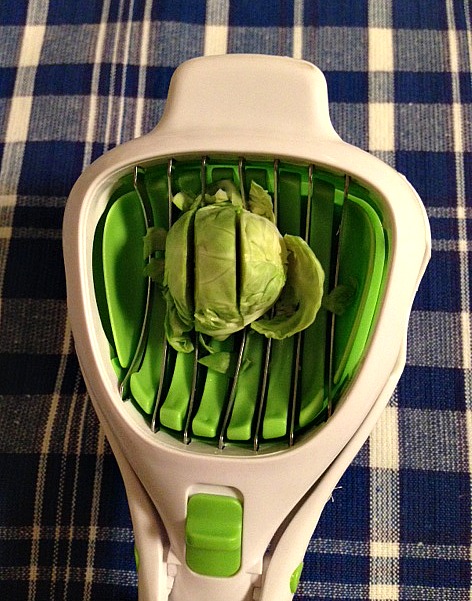
To prepare the sliced Brussels sprouts, first remove the stems and outside leaves, and cut the notch into the bottom. Then, cut in ¼-inch thick slices. We put The World’s Greatest™ Handy Dandy Super Slicer to work (To be notified when it’s available, Contact Us) which makes quick work of slicing any soft veggie or fruit in uniform widths, plus it locks in a closed position for drawer storage.  To note, if you have tough or very large Brussels sprouts, opt for a knife. The Handy Dandy Super Slicer works well if you have small, delicate sprouts. A Chef’s knife is also  a great choice.

Brussels Sprout in The World's Greatest Handy Dandy Super Slicer

Brussels sprout in The World’s Greatest Handy Dandy Super Slicer

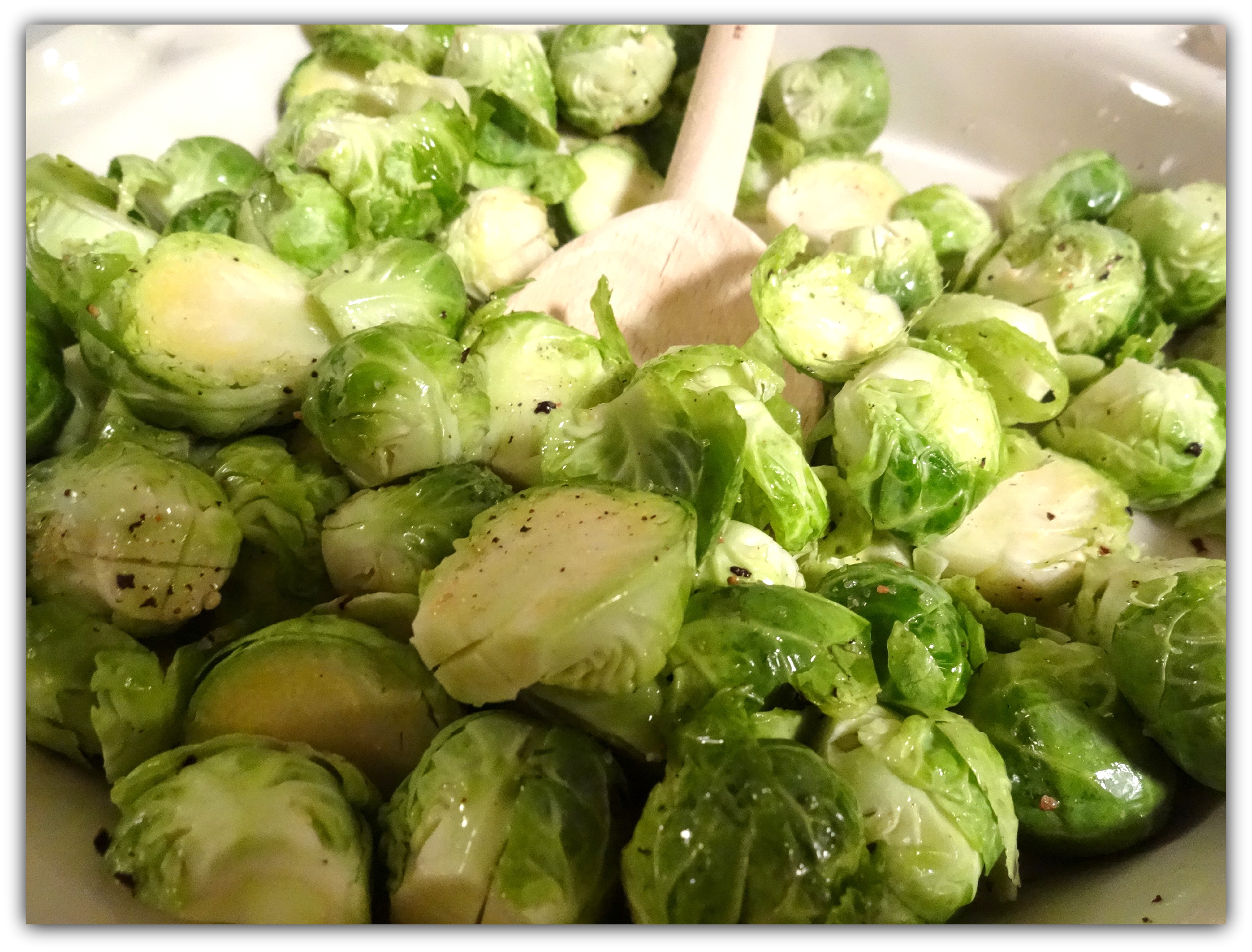
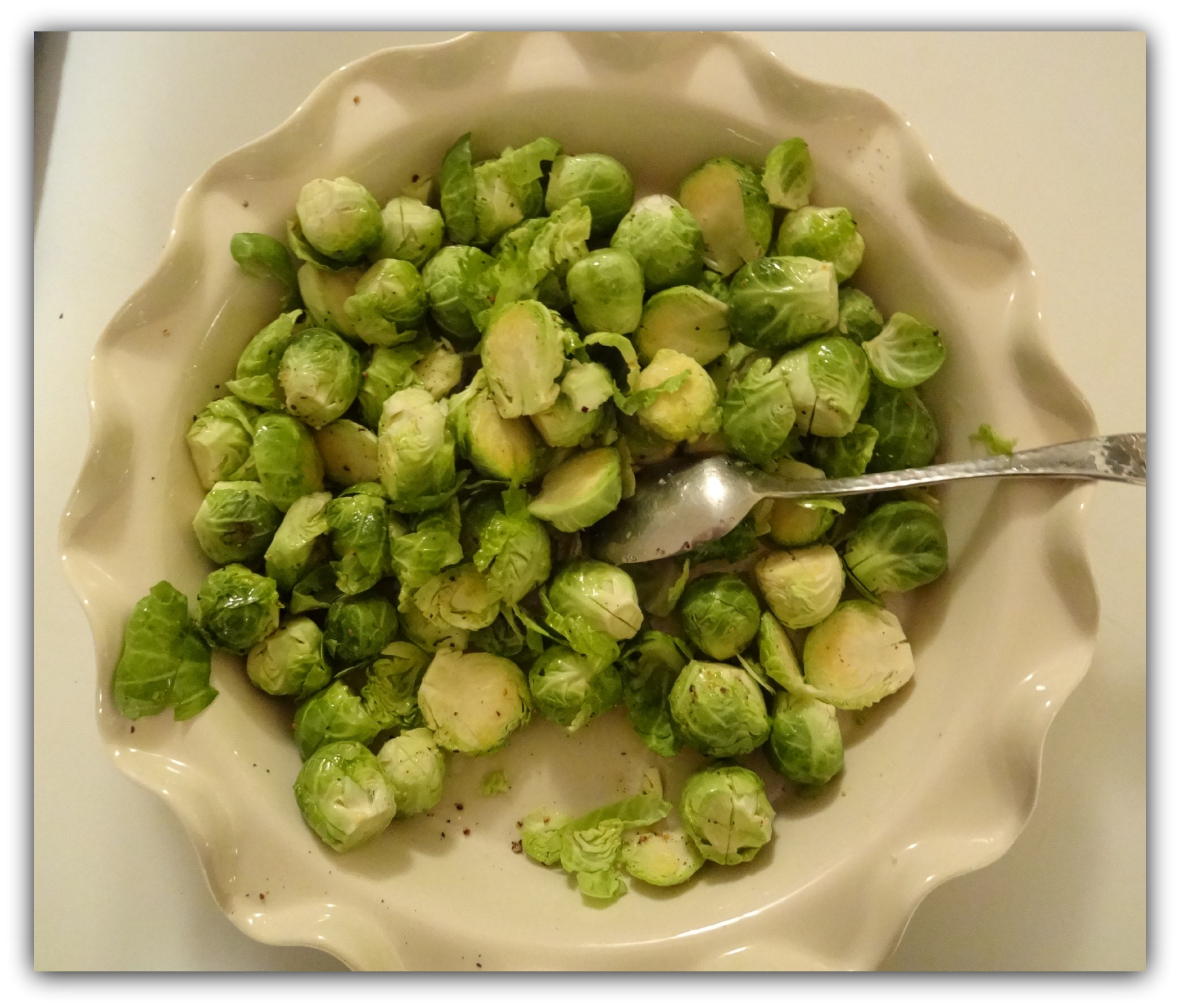
Place both whole and sliced Brussels sprouts in a roasting pan or pie dish. In this recipe, we used Rose’s Perfect Pie Plate. Toss with 2 tbsp. truffle oil until the sprouts are well coated and sprinkle with 1/2 tsp. of Himalayan sea salt (you may prefer to add more to taste, after cooking) and a 1/2 tsp. or a few twists of fresh ground black pepper.

Brussels sprouts tossed with truffle oil and sea salt

Brussels sprouts tossed with truffle oil and sea salt

Brussels sprouts in Rose's Perfect Pie Plate, before roasting

Brussels sprouts in Rose’s Perfect Pie Plate, before roasting

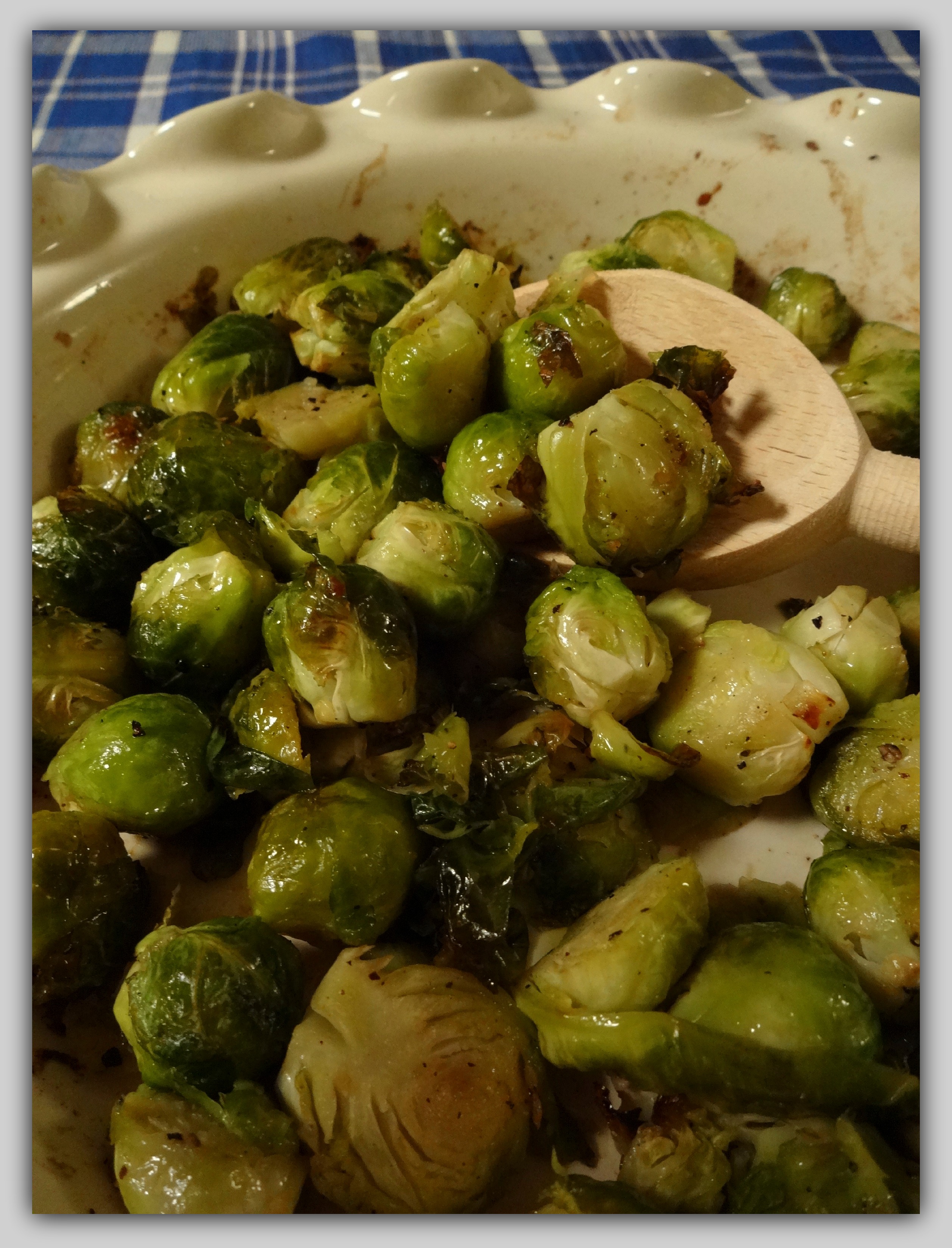
Place the Brussels sprouts on the top rack of a 400-degree oven and cook for 20 minutes, then remove and stir so that the sprouts get coated with the truffle oil and salt that has migrated to the bottom of the pie plate. Put back in the 400 degree oven and cook for another 15 minutes, or until sprouts are browned. Note, the smaller pieces may brown more and have crunchier edges than the whole Brussels sprouts. The two compliment each other nicely.

Roasted brussels sprouts with truffle oil and sea salt

Roasted Brussels sprouts with truffle oil and sea salt

Variations:

If you’d like to mix it up, here are a couple variations I’ve tried.

Use plain olive oil if you or your guests are not fond of truffles.

Toss in pancetta with the Brussels sprouts at the time roasting begins. This imparts a delicious flavor, and fills the kitchen with a wonderful aroma of cooking bacon.

Add nuts during the last 5 minutes of cooking. Slivered almonds, pine nuts, or pecans are all delicious, sprinkled on top.

Add a 1/2 cup of grated cheese, such as Grana Padano or Romano, 5 minutes before roasting time is up. Stir in, and roast for the remaining time.

Contributed by Nicole H., of HIC

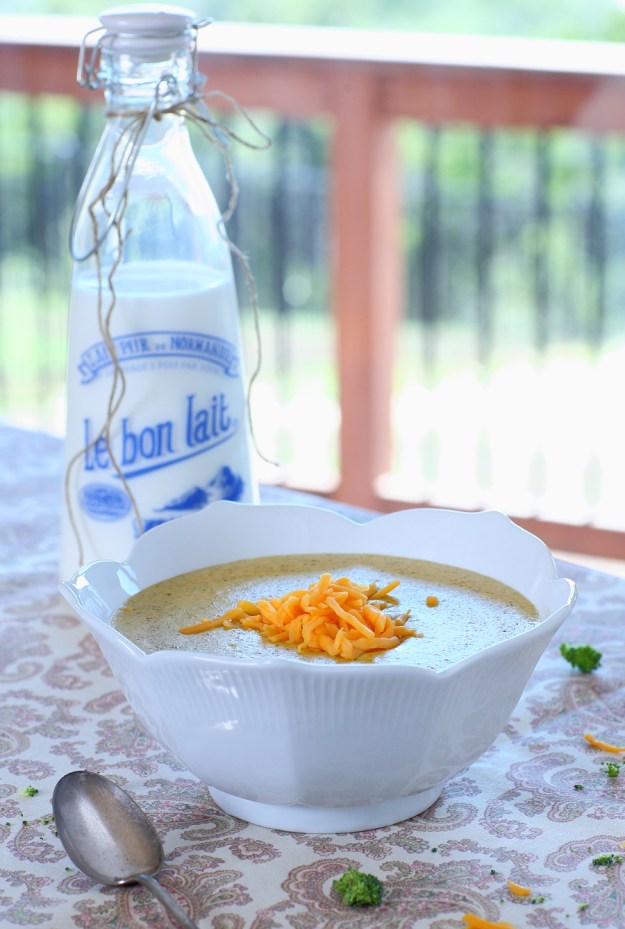
Roasted Broccoli & Cheddar Bisque from Modern Mrs. Cleaver

Roasted Broccoli and Cheddar Bisque from Modern Mrs. Cleaver

Roasted Broccoli and Cheddar Bisque from Modern Mrs. Cleaver

Modern Mrs. Cleaver first caught our attention almost a year ago, blogging with passion and humor, capturing and sharing her experiences with the world through beautiful photography and heart warming stories. She has a gift for inventing and passing along recipes that are cost effective and yet delicious and fun to make. We’re honored to have been a part of her recent recipe post, featuring Roasted Broccoli & Cheddar BisqueModern Mrs. Cleaver served her scrumptious bisque in our very own HIC Porcelain Lotus Bowl, reminding us that Autumn is not only a time to think about preparing our best nourishing, hearty, and comforting recipes, but also to be thoughtful in the presentation; That it can be as beautiful as the ingredients within. 

Looking for a few HIC Porcelain pieces for your table? Find yours.

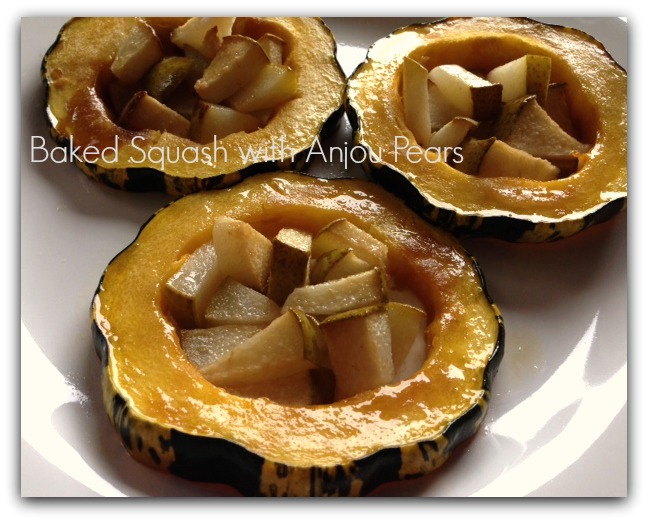
Baked Squash with Anjou Pears

Baked Squash with Anjou Pears

Baked Squash with Anjou Pears

Baked squash with fresh picked Anjou pears – a perfect combination to welcome autumn’s arrival.

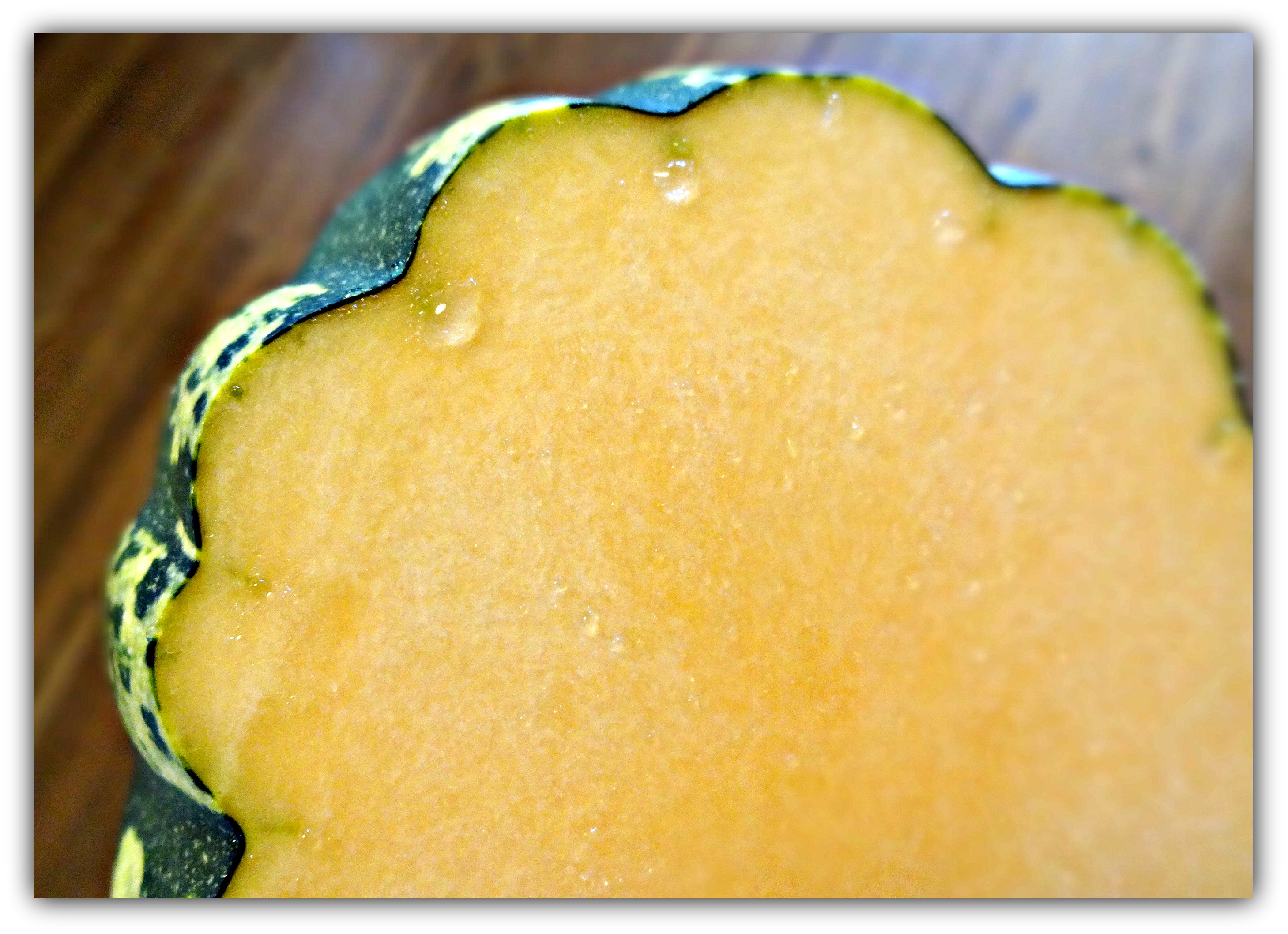
Winter squash is at it’s peak in markets around the country in late summer and early fall; this is the perfect time of year to incorporate this nutrient rich, delicious vegetable into your menu.  It can be incredibly versatile – perfect in sweet pies, savory side dishes, as a hearty salad topping, even used as a bowl for fall soups. We feature the winter squash varietal known as carnival squash in this post, beautifully colored in shades of gold, orange, and green, eye catching with it’s stripes and spots.  The meat inside is yellow and sweet, tasting a bit buttery and nutty when cooked. When picking out a winter squash, look for one free of moldy spots, and a hard, not tender skin.

Carnival Squash and Anjou Pear

Autumn’s Bounty – Carnival Squash and Anjou Pear

While perusing a local farmer’s market, we picked up fresh Anjou pears too – sweet, with a firmer texture than a Bartlett, which makes them a superior choice for cooking.

Baked Squash with Anjou Pear Recipe

Ingredients

1 carnival squash
3 Tbls butter
3 Tbls brown sugar
1 Anjou pear

Tools

Silpat baking mat (optional, but ideal for easily transferring baked squash wreaths to serving dishes)
Baking pan
Small pitcher to drizzle melted butter
Knife
Hard edged scraper or spatuala to remove squash seeds and distribute brown sugar

Step-by-Step Instructions

carnivalsquash

Carnival Squash

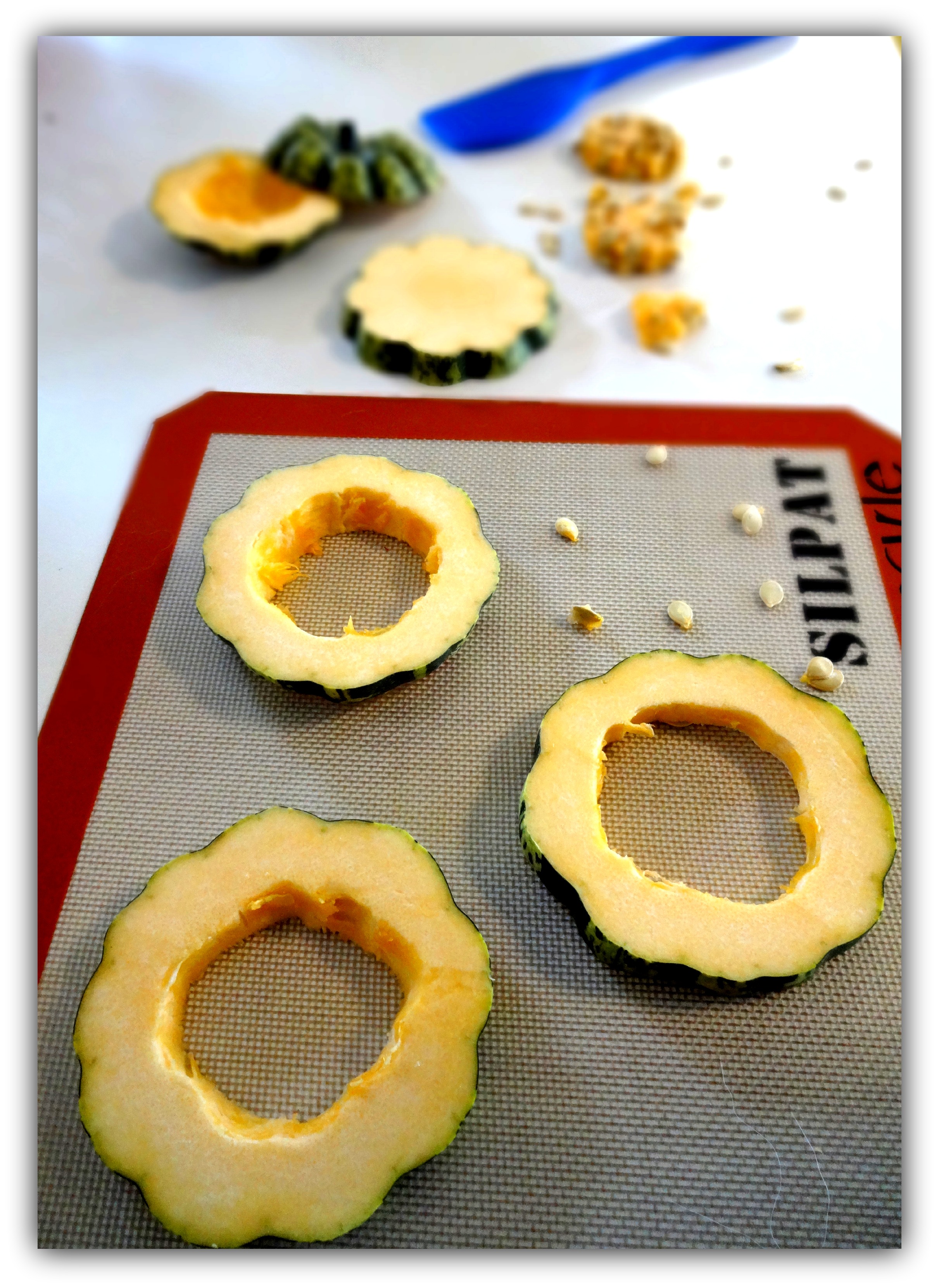
Remove top and bottom ½ inch from carnival squash. Slice remaining squash horizontally, into 3/4 inch thick slices. Remove seeds with a hard edge scraper. Place on baking sheet; using a Silpat mat is ideal to enable the squash wreaths to lift easily after baking, but you can make this dish without as Silpat too.

CarnivalSquashSliced

Sliced Carnival Squash on Silpat Baking Mat, Seeds Removed with Silicone Scraper Pictured

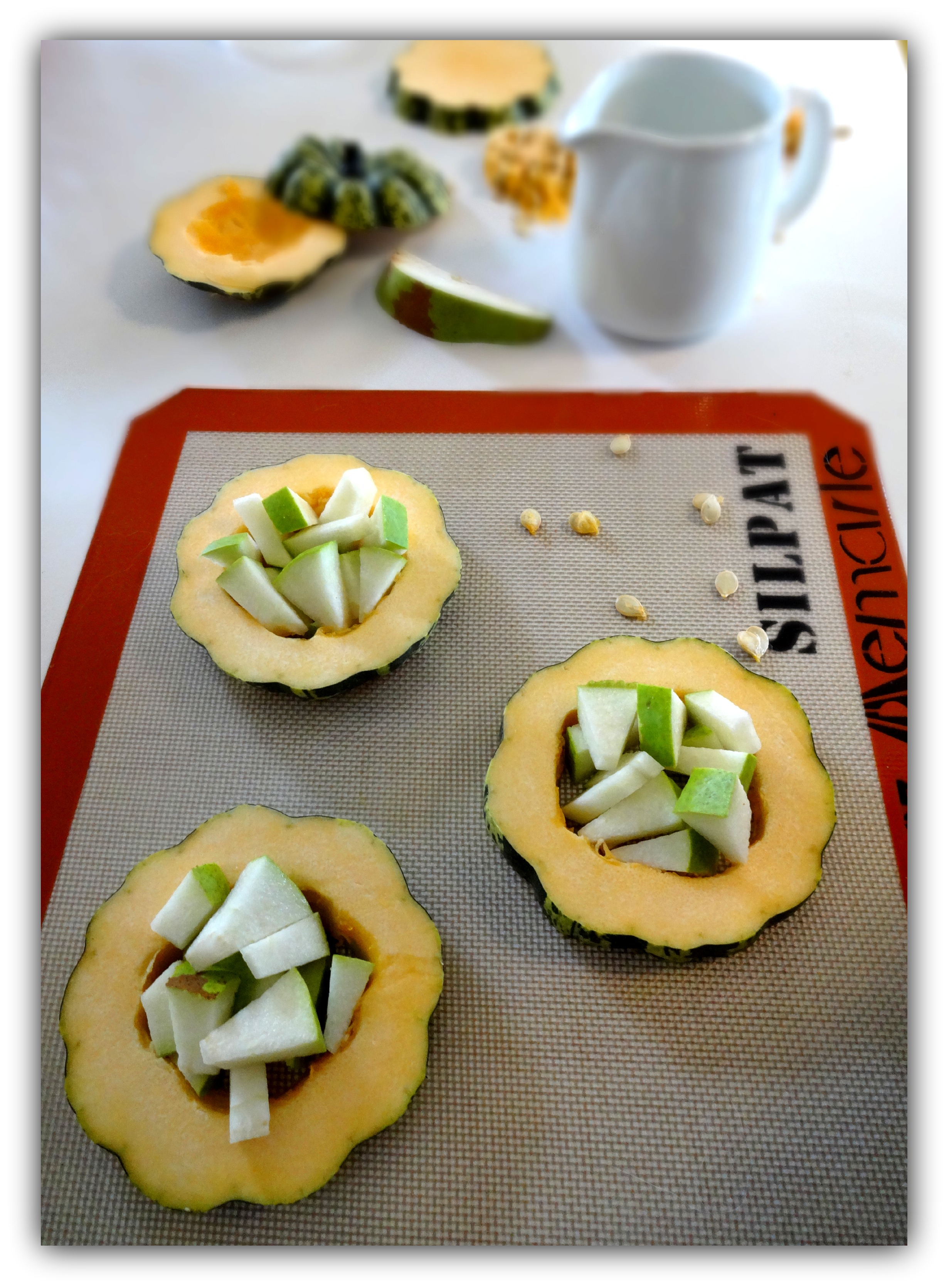
Slice and remove the core and seeds from the Anjou pear. Chop remaining slices into 1 inch pieces.

Carnival Squash Rounds Filled with Anjou Pear

Carnival Squash Rounds Filled with Anjou Pear

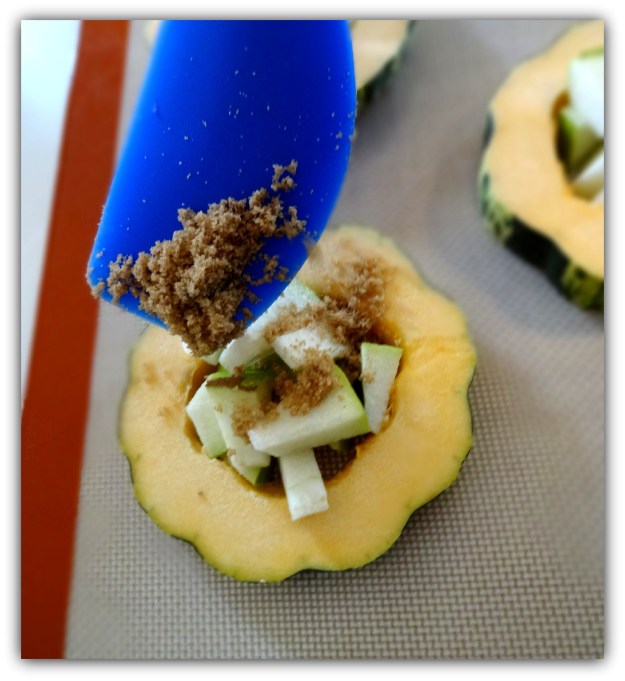
Fill each carnival squash rounds with chopped pear, and sprinkle with brown sugar.

Brown Sugar Adds a Touch of Sweetness to Anjou Pear Filled Carnival Squash

Brown Sugar Adds a Touch of Sweetness to Anjou Pear Filled Carnival Squash

Drizzle melted butter over the top.

Pour Butter over Squash and Pear Wreaths

Pour Butter over Squash and Pear Wreaths

Please in oven at 350 degrees, for 40 minutes. Serve!

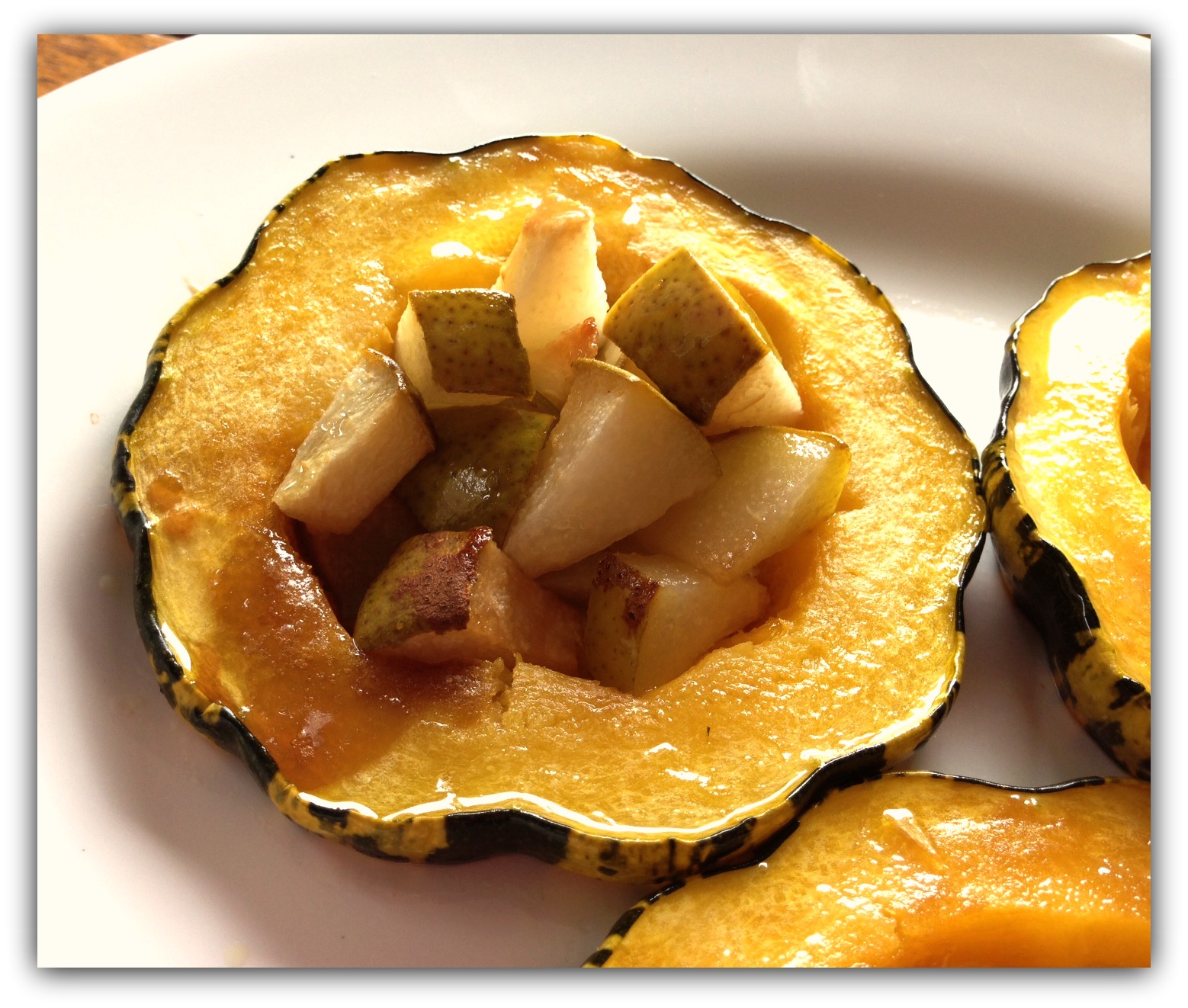
Ideally, use a wide, flat spatula to transfer the squash wreaths to serving plates. 

Carnival Squash and Anjou Pear Wreaths

Carnival Squash and Anjou Pear Wreaths

Contributed by Nicole H., of HIC

Homemade Cavatelli from The Ranting Chef

Fante's Cousin Elisa's Cavatelli Maker

Fante’s Cousin Elisa’s Cavatelli Maker

Heard the Rantings of an Amateur Chef? This is the blog of Pat Geyer, who embarks on frequent culinary adventures, kindly sharing his lessons and excitement with lucky fans. We wanted to share his recent homemade cavatelli quest with you here at The Useful Tool. Pat put our Fante’s Cousin Elisa’s Cavatelli Maker to the test (made in partnership with the Fante family of Philadelphia) teaching readers how to turn out beautiful shell-shaped cavatelli pasta noodles. If you’ve ever wanted to learn how to make homemade cavatelli, Pat has you covered.

Cheese Spaetzle Recipe and Spaetzle Maker or “Hobel” Tips

Cheese Spaetzle or käsespätzle

Cheese Spaetzle or käsespätzle

Spätzle, as my Grandma Esther would spell it, loosely means “little sparrow” and gets it’s name from a time before kitchen tools like spaetzle makers, or “hobels” as they’re also known, were readily available. Historically it was shaped by hand with a spoon or knife and was thought to resemble small birds. Spaetzle is the base of many dishes in a cookbook my Grandma presented to me on my 16th birthday; A fantastic compilation of family photographs spanning 5 generations, rustic recipes laden with meat and starchy vegetables meant to feed a large farming family, ingredient lists calling for everything from goat’s milk to “Aunt Edna’s canned pears,” plenty of spaetzle, and clippings from newspapers and magazines that had significance to my Grandmother either culinary or personal. This book is a time capsule and I smile every time I go through it.

Spaetzle is traditionally used as a base for both sweet and savory dishes, soups, and one-dish meals, as it is in my family cookbook. It’s inexpensive, filling, and can be modified to please a variety of palates. I’ve attempted every recipe in Grandma’s cookbook including spaetzle with cherry sauce made with Grandma next to me, others like squash pie made along side my dad, and the one I’m sharing here – Käse or Light Cheese Spaetzle – I make for my family. Grandma Esther left a sweet message in the book, noting, “Dear Nee Nee, some of the dishes may not be so practical for modern times (Maybe she was thinking of the kidney pie? My ancestors didn’t waste a bit.) I hope you find a few that you can enjoy.” And I have. The flavor and texture of spaetzle is comforting, and brings warm feelings of nostalgia. It’s quick to whip together for guests, plus one batch of noodles can be topped a variety of ways to suit everyone around the table. I hope you might enjoy it too.

Grandma Esther’s käsespätzle or Spaetzle with Cheese Recipe

Spaetzle Ingredients

Spaetzle Ingredients

Spaetzle Ingredients (Makes 2 servings; Modified from original which served 10)

1/2 cup whole wheat flour (this imparts a nuttier, heartier texture)
1/2 cup plus 2 tablespoons all-purpose flour
1 teaspoon salt
1 teaspoon ground pepper
2 large eggs
1/4 cup milk

Spaetzle Dressing:
2 pats butter
½ cup grated cheese (my Grandmother used Emmentaler, a harder German cheese) Here is a great website with a guide to German cheeses, for your perusal.
Additional salt and pepper to season

Tools: Spaetzle Maker or Hobel. Visit HIC’s “Where to Buy” page to find one at a kitchen shop near you.

Directions:

Combine the flour, salt and pepper.

Dry Spaetzle Ingredients

Dry Spaetzle Ingredients

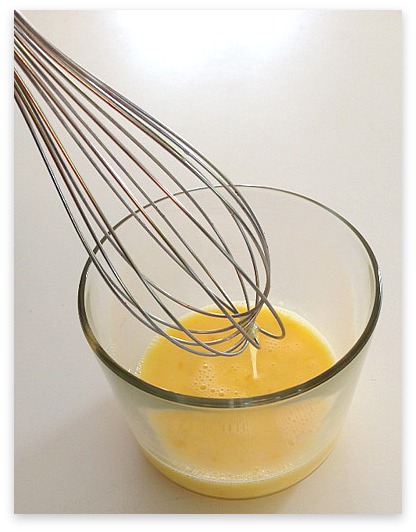
Wet Spaetzle Ingredients

Wet Spaetzle Ingredients

In a second bowl, whisk the eggs and then add in the milk.

Create a depression in the center of the flour mixture and pour in the wet ingredients. The flour should be added and blended gently and slowly, scraping from the sides of the bowl, until well combined.

Wet and Dry Spaetzle ingredients

Blend dry ingredients slowly into wet spaetzle ingredients

The dough should be thick but not ridged, like a stiff muffin batter. I find the dough is easiest to work with, when I refrigerate for 10 minutes before placing in the spaetzle maker or “Hobel.”

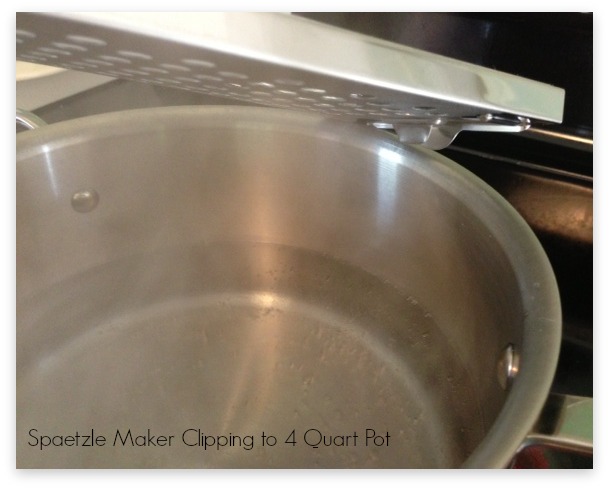
Bring a pot of lightly salted water to a boil, and then reduce to a simmer. Make sure the pot is wide enough to allow for the spaetzle maker to sit on top, if using this device. Place the spaetzle maker over the pot, and clip to one edge.

Spaetzle maker clipping to 4 quart pot

Spaetzle maker clipping to 4 quart pot

Fill the hopper with a ball of dough, filling it to the top. Slide the hopper across, and watch the dough fall through the holes, into the simmering pot below!

Moving dough through spaetzle maker

Moving dough through spaetzle maker

Do this in batches so you don’t get a thick layer of spaetzle accumulating, which can clump together. With this size recipe, and using a 4 quart pot, I found I don’t have to do batches, I can make all the spaetzle at once and there’s enough surface area on the top of the pot to deter clumping. This dough recipe fills the hoper of the spaetzle maker exactly once. You know the spaetzle is done, when it floats to the surface of the pot.

floating spaetzle

floating spaetzle

Stir it gently to prevent it from sticking. Remove the finished spaetzle noodles form the pot with a slotted spoon or dump the whole pot into a smooth surface colander (not a mesh strainer, I find it sticks to the mesh) and give it a light rinse of cold water.

Place the rinsed spaetzle into a bowl with sides high enough to permit tossing, and drop the 2 pats of butter on top. The heat of the spaetzle will melt the butter. Stir in. Sprinkle the cheese into the bowl as well, and stir to combine with the buttered spaetzle. Dish into smaller bowls, and add a little more salt and pepper to taste, if desired. (Or, more cheese on top.) Dig in!

Cheese Spaetzle

Cheese Spaetzle

Article Contributed by Nicole H., of HIC

Straight Up Deviled Eggs from Elizabeth Karmel

It’s finally here, the official start to grilling season—although anyone who knows me, knows that I grill year ’round!  Still, Memorial Day is a great time to celebrate cooking outdoors.
I love creating a build your own burger bar when I cook for a crowd.  It’s easy on the cook (me!) and lots of fun for my company.  I make up a mess of patties in advance and simply fill the grill with them.  When they are done, I put them on a platter and they join the buffet of buns, topping and condiments that I have laid out.  Because there are so many fun and tasty ways to top the burgers, I always count on each person having two.  This is a real crowd pleaser.
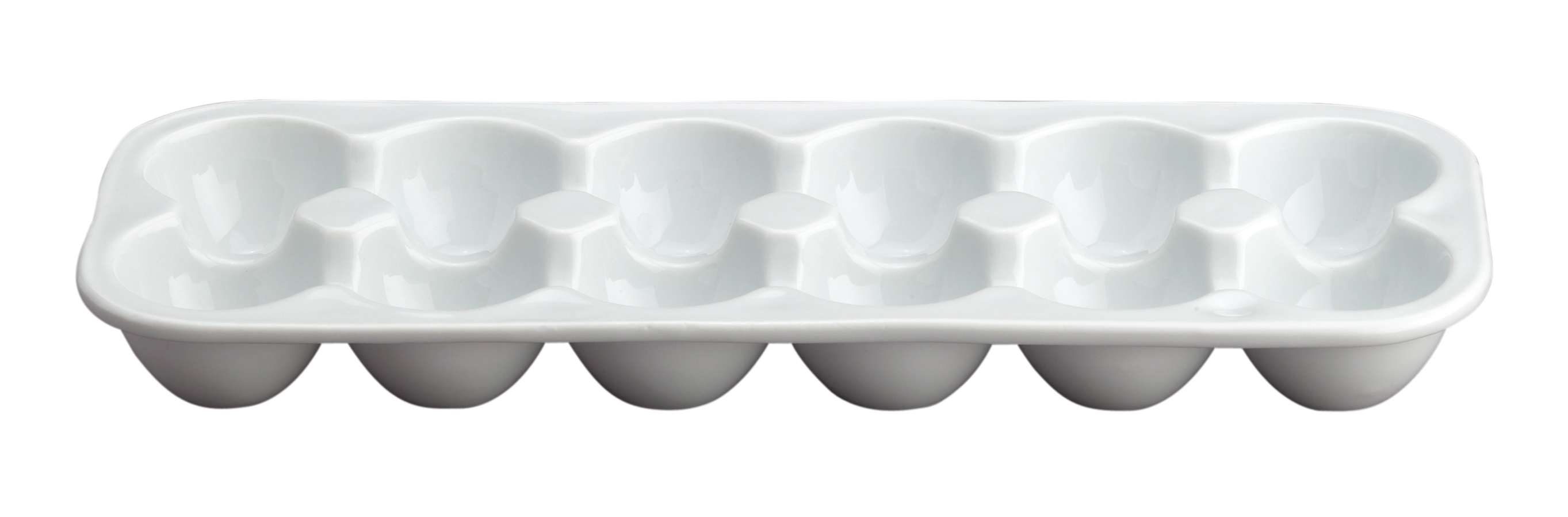
The day before my cookout, I always make my Straight Up Deviled Eggs while I am getting all the burger toppings together.  The eggs actually taste better once all the  deviled flavors have had a chance to meld and marry in the fridge. Try presenting the eggs in my Grill Friends Porcelain Egg Crate.  It is functional and whimsical.  But note that you will need to cut the eggs across instead of lengthwise.

On the day of the party, all you have to do is fill the shells with the deviled mixture.  I love that all the hard work is done and I have more time to enjoy my party!

Elizabeth Karmel

Straight-up Deviled Eggs Recipe

These classic deviled eggs are summer on a plate and a welcome addition to an cookout!

1 dozen large eggs
⅓ cup Hellmann’s mayonnaise
2 tablespoons strong Dijon mustard
5 tablespoons unsalted butter, softened
Zest of ½ lemon
1 teaspoon fresh lemon juice
Pinch of garlic powder
2-4 shakes Tabasco
Sea salt to taste
Smoked Paprika or minced fresh chives for garnish

Place the eggs in a large stockpot and cover with cold water.  Bring to a boil, cover and turn off the heat.  Let sit 20 minutes.  Drain and run under cold water until eggs are cool to the touch.  Let sit another ten minutes.

Porcelain Egg Tray, part of Elizabeth Karmel's Grill Friends BBQ line. Made by HIC, Harold Import Co.

Porcelain Egg Tray, part of Elizabeth Karmel’s Grill Friends BBQ line. Made by HIC, Harold Import Co.

Peel eggs carefully, keeping whites in tact.  Cut in half across the middle and remove yolks.  Set whites aside in the Grill Friends Porcelain Egg Crate.  Break yolks up and mash with a fork until all large pieces are broken up and smooth.

Add mayonnaise, mustard, butter, lemon zest and juice, garlic powder and Tabasco.  Stir well.  Taste and season with sea salt.  Just before serving, place in a pastry bag or use a small spoon to fill egg white “boats” with “deviled” egg yolk mixture.  Sprinkle with smoked paprika for classic eggs, chives for a fancier-looking version.

Makes 24 deviled eggs

Looking for a juicy burger recipe? Check out Elizabeth Karmel’s Backyard Burgers. Try the Grill Friends Steakhouse Burger Press to make quick work of perfect patties.

Grill Friends Steakhouse Burger Press

Grill Friends Steakhouse Burger Press

Learn more about the Grill Friends line at http://www.hickitchen.com/elizabeth-karmels-grill-friends.aspx

Aunt Gina’s Lasagna – A Traditional Italian Recipe from the Fante Family of Philadelphia

Fante Family

Fante Family

Sunday Dinners: The Special Occasions. Contributed by The Fante family.

Since I was a little girl, Sundays were reserved for family.  Both my parents’ businesses – Fante’s (a kitchen wares shop) and Esposito’s (a butcher shop) in the Italian Market of Philadelphia both closed by 2PM in order to have mid-afternoon Sunday dinner.  Along with my sister and 3 cousins, we would spend the whole day at our Nonni’s (grandparents’) home:  going to church, helping cook dinner and playing together. My Nonna would wake up at the crack of dawn to chop all the vegetables for the gravy and start it simmering with the tomatoes which she would put through a food mill to create a uniform sauce.  She would then make the meatballs and sausage, fry them, and add them to the sauce, which would be simmering on low heat by the time my sister and I woke up and made it downstairs for our traditional chocolate chip pancake breakfast (we were totally spoiled).

Filled to the brim with pancakes, we would help her to make the pasta dough and leave it to rest, covered, while we went to church.  When we returned, we would continue to cook the sauce, allowing it to simmer while we rolled out the dough on the manual pasta maker.  All of the cousins took turns working the crank and catching the pasta – it was always at least a 2-cousin job.

Normal Sunday dinners meant fresh meatballs, sausage and gravy served with homemade pasta of some kind.  For special occasions like birthdays and holidays, we would do trays of lasagna. Nonna would supervise all of the extra tasks for making the lasagna, the most important being the fresh grated cheese.  We love cheese!  And did I mention our Sunday dinners included an epic amount of food?  Every week about 12 family members would join us around a table meant for 6, filled with enough food to comfortably feed 30.  These large trays of lasagna require a lot of cheese.  The older cousins were responsible to grate about a pound of parmesan and shred about 2 pounds of mozzarella.  We all proudly sported some scarred knuckles from the rasp we used [that we swear] she had brought with her from Italy.  It was torture.  She eventually replaced it with a large rotary grater which made the job so much easier!   It handled the volume, and it was simple to swap the drums for each cheese.  We could also all take turns since it didn’t require as much elbow grease or Band-Aids. We are so excited to have a new cousin (#6) – Nico!  We can’t wait for the day we can enlist his help to use the grater named after him to make some Sunday dinner lasagna. Here is the recipe for a smaller-portion of our lasagna.  We typically make it with just sauce and cheese. You can certainly substitute bought lasagna for the pasta portions and add meat to customize it to your family’s tastes.  You can also find many of our family recipes (as well as embarrassing family photos) included with the Fante’s line of products.  Buon appetito!

Aunt Gina of the Fante Family

Aunt Gina of the Fante Family

Aunt Gina’s Lasagna

Makes 6 to 8 servings
1 lb. homemade lasagna strips
1 lb. ground meat (beef, pork or mixture)
4 cups salsa marinara (recipe, scroll down)
16 oz. mozzarella, shredded
16 oz. grated cheese (parmigiano and pecorino)

1. Brown ground meat in a fry pan then drain off the fat. Place salsa marinara in a sauce pan, stir in browned meat and heat gently over a medium flame until it’s hot. Stir occasionally to keep it from sticking.

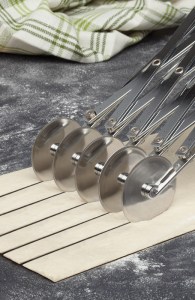
2. Meanwhile, roll pasta dough (scroll down for recipe) to desired thickness and cut into 2 ½” wide strips (Try Cousin Daniele’s Expandable Dough Cutter. Available at Fante’s)

Fante's Cousin Daniele's Expandable Dough Cutter

Fante’s Cousin Daniele’s Expandable Dough Cutter

3. Spoon hot meat sauce into the bottom of a 11” x 15” baking dish.

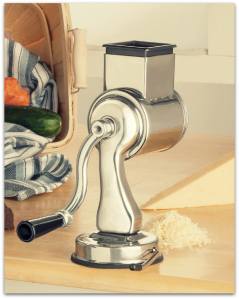
4. Place a single layer of lasagna strips into the baking dish, lengthwise. Layer with grated cheese (try Fante’s Papa Francesco’s Rotary Cheese Grater or Fante’s Cousin Nico’s Suction Base Cheese Grater, available at Fante’s)  and mozzarella then top with meat sauce. Repeat these steps for the second layer but place lasagna strips widthwise. Alternating the direction of the pasta strips will keep your lasagna from falling apart when it’s cut.

Fante's Cousin Nico's Suction Base Cheese Grater

Fante’s Cousin Nico’s Suction Base Cheese Grater

5. Repeat step 5 to make as many layers as you like. Finish by spooning more sauce on top and sprinkle with grated cheese. 6. Bake at 350°F for 45 minutes or until sauce and cheese are bubbling. Remove lasagna from the oven and let rest for 30 minutes before serving.

Grandma Nadia of the Fante Family

Grandma Nadia of the Fante Family

Grandma Nadia’s Pasta Dough

Makes 2 pounds of dough
2 eggs, at room temperature
4 cups unbleached all-purpose flour
4 to 8 ounces tepid water, as needed

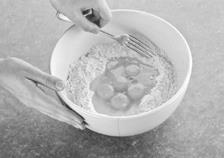
1. Place flour on a wooden board, make a well and break the eggs into it.

2. If you prefer, you can mix it in a bowl with a fork or in an electric mixer with a dough hook.

Pasta Dough Step 1

Pasta Dough Step 1

NadiasPastaDoughStep2

Nadias Pasta Dough Step 2

3. Slowly incorporate the flour into the eggs. There should be just enough moisture so the ingredients stick together to form a smooth, elastic ball but not enough to stick to the table or bowl.

Pasta Dough Step 3

Pasta Dough Step 3

Nadias Pasta Dough Step 4

Pasta Dough Step 4

4. You may need to add a bit of water if the dough is too dry and crumbly, or a bit more flour if too wet and sticky.

5. Cover the dough with a clean towel and let it set for about 30 minutes.

6. Use a sharp knife to cut off a chunk from the ball (photo 4).

7. Flatten the chunk of dough with the heal of your hand then roll it out to the desired thickness with a floured rolling pin.

8. Proceed with Step 2 of Aunt Gina’s lasagna recipe instructions, above.

Attilio of the Fante Family

Attilio of the Fante Family

Attilio’s and Mariella’s Salsa Marinara – Marinara Sauce

Makes 1 quart (4 to 6 servings)
36-oz. can crushed tomatoes
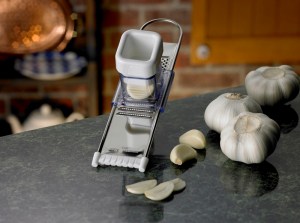
5 cloves garlic, coarsely chopped (Try Fante’s Uncle Cristian’s Garlic Slicer and Grater, available at Fante’s)

Fante's Uncle Cristians Garlic Slicer and Grater

Fante’s Uncle Cristians Garlic Slicer and Grater

¼ onion, coarsely chopped
Olive oil Salt, pepper, and red pepper flakes to taste

1. Sauté garlic, onion and red pepper in olive oil. Remove them from the oil before they brown.

2. Add tomatoes.

3. Simmer for about 40 minutes.

4. After 15 minutes add salt and pepper to taste.

5. After another 30 minutes, check sauce for consistency; if too watery, leave lid off to reduce.

6. Stir often to avoid sticking, especially if the pot you’re using does not have a heavy bottom.

Buon appetito!


Asparagus Salad with an Asian Twist – A Recipe to Celebrate Spring from Helen Chen

Article contributed by leading Asian culinary expert, cookbook author, cooking instructor, and developer of Helen Chen’s Asian Kitchen® cookware and cooking supplies, Helen Chen.

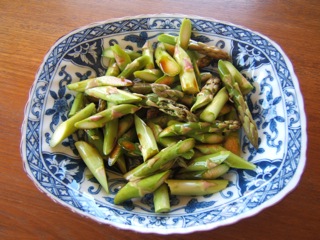
Asparagus Salad

Asparagus Salad

I so look forward to spring.  Not only for the promise of warm weather and longer days, but also for the anticipation of fresh local produce.  What better harbinger of the coming seasonal bounty than asparagus.

In New England, we have a number of farms that grow this delectable vegetable, but in Western Massachusetts, the town of Hadley, crowned “The Asparagus Capital of the World,” is famous for it.  I don’t know if that moniker is still actually true, but here in Massachusetts we are used to hyperbole.  To us, Boston is “The Hub of the Universe!”

Asparagus fits beautifully into Asian cuisine where it is most commonly parboiled or stir fried.  One of my favorite (and easiest) asparagus recipes is a salad I learned from my mother.   She always made it when asparagus were in season.  It’s quick, incredibly easy and pairs deliciously with Asian or Western foods.  I make it all the time and have converted many friends with this recipe.

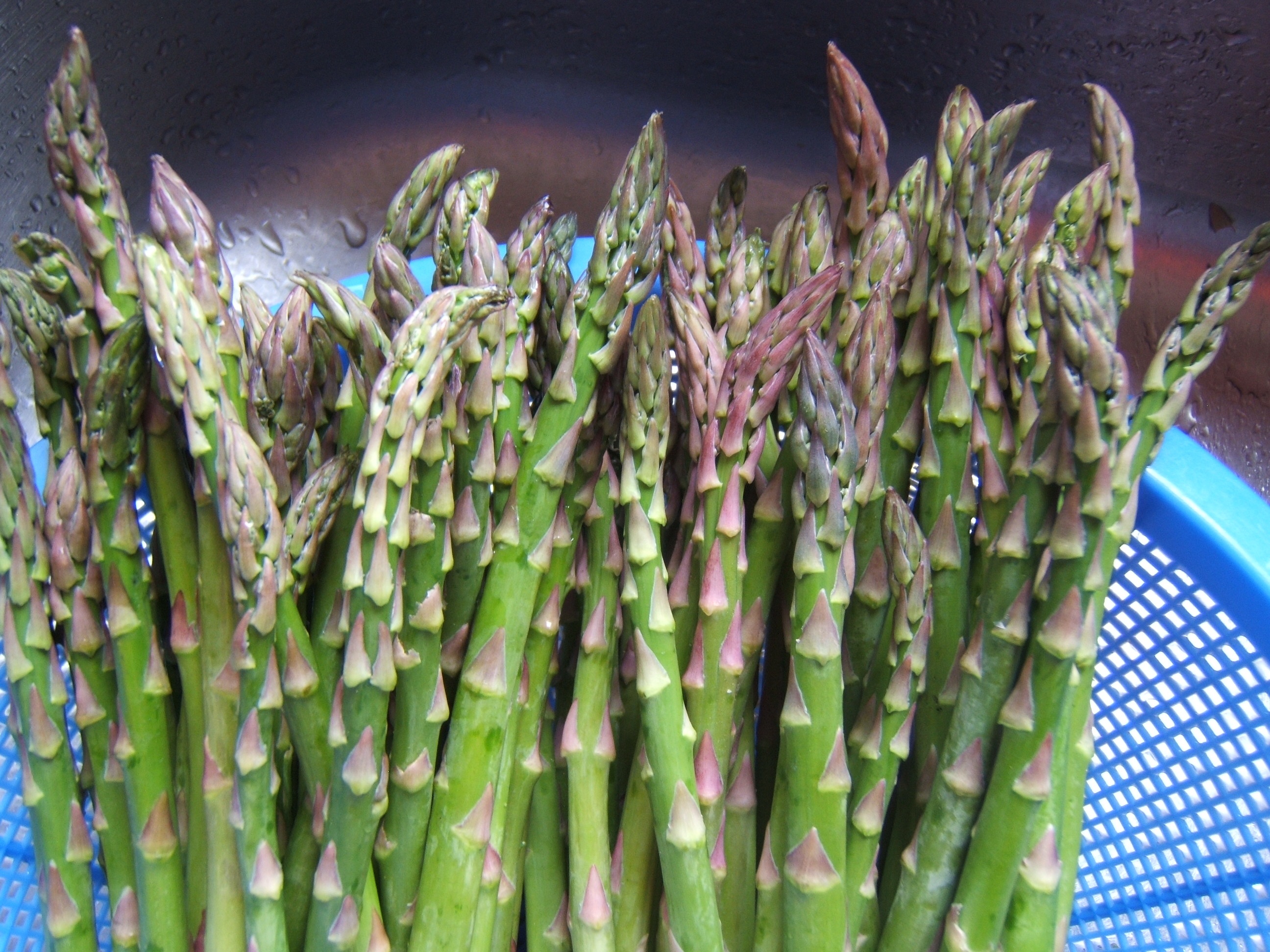
asparagus

When buying asparagus, look for bright green spears with tight crowns.  Anything limp, yellowed or wrinkled should be passed by.  I prefer spears that are at least ½” in diameter because I think the thicker spears are more tender and better tasting.   Be careful not to overcook the spears and remember to immediately plunge them into cold water after cooking to maintain that spring green color and tender-crisp texture.

Welcome spring to your table with this tasty asparagus salad.  Happy Spring!

Helen Chen

ASPARAGUS SALAD RECIPE

1 pound fresh asparagus

3 tablespoons soy sauce

1 teaspoon Asian sesame oil

1.  Cut or snap off the tough ends of the asparagus.  Wash well and cut on the diagonal into 1½-inch lengths.  (I like to use my incredibly sharp Ceramic Paring Knife)

2.  Bring 6 cups of water to a boil in a saucepan over high heat.  Add the asparagus pieces and as soon as the water returns to a boil, drain and quickly cool in cold water to stop the cooking.  Drain well.  (The asparagus may be cooked a day ahead and refrigerated)

3. Just before serving, place the asparagus in a serving dish and toss with the soy sauce and sesame oil.  Serve at room temperature.

COOL TOOL TIP: 

Among my (and just about every professional chef’s) favorite and frequently used tools for straining are my “Spider” skimmers and basket.  They are affectionately called “spiders” because of the “web” of hand-woven stainless steel wire that make up the basket.  They drain incredibly fast and thoroughly.  Even better than a colander!

Spider Strainer Basket

Spider Strainer Basket

With the Spider Strainer Basket, simply fill it with the asparagus pieces and place the whole basket into the boiling water. Convenient hooks on the handle allow the basket to be attached to the side of the pot.  When the asparagus are done just lift the basket out of the hot water and rinse under cold water in the sink. See where to find a Spider Strainer Basket near you.

Would you like to meet Helen? See Helen Chen’s Cooking class schedule.

Copyright © 1994 and 2013 by Helen Chen.  All rights reserved.

Biography of the Author, Helen Chen

Helen Chen

Helen Chen

Helen Chen is a widely acknowledged expert in Chinese cooking. Besides her role as an educator and cookbook author, she also is a product and business consultant to the housewares industry. In 2007 she created and developed a new line of Asian kitchenware under the brand name, “Helen’s Asian Kitchen,” expressly for Harold Import Company in New Jersey.

Having been born in China, and raised and educated in the United States, Helen brings the best of both worlds to her approach to the art of Chinese cuisine. She understands the needs of the American cook as only a native can, yet she is intimately knowledgeable with the culinary practices and philosophy of China.

Helen is the author of Helen Chen’s Chinese Home Cooking (Hearst Books,1994), Peking Cuisine (Orion Books,1997), Helen’s Asian Kitchen: Easy Chinese Stir-Fries (John Wiley & Sons, 2009) and Helen’s Asian Kitchen: Easy Asian Noodles (John Wiley & Sons, 2010). For more information, visit http://www.helensasiankitchen.com/

*Not affiliated with Joyce Chen Products

Clams in Black Bean Sauce – A Recipe to Celebrate Chinese New Year, 2013… Year of the Snake

Article written by leading Asian culinary expert, cookbook author, cooking instructor, and developer of Helen Chen’s Asian Kitchen® cookware and cooking supplies, Helen Chen. For full Bio, please see below…

Clams in black bean sauce

Clams in black bean sauce

February 10, 2013 ushers in the new Year of the Snake. The exact date of Chinese New Year, or Spring Festival, as it is commonly known in China, is determined by the phases of the moon. The Chinese lunar calendar is one of the oldest chronological records in history.

Chinese New Year is a time for grand celebrations and in China almost one billion people are on the move. It’s the one time in the year that everyone tries to journey to their respective hometowns for family reunions and banquets. I always suggest to tourists not to even think about visiting China during the New Year festivities. You won’t be able to buy a train, plane or boat ticket. It will be that busy and chaotic.

In the days preceding New Year the house must be cleaned, all debts settled and the house decorated with good luck symbols and signs. It’s considered unlucky to sweep or cut your hair during Chinese New Year because you’d sweep away good fortune and since the Chinese word for “hair” is a homonym for prosperity, the last thing you want to do is to cut your wealth in half.
Good luck couplets are written on scrolls of red paper and hung on either side of the front door. Flowers also play an important part in the New Year celebration. It’s traditional to have a bowl of fragrant narcissi that have been forced to bloom just in time for Chinese New Year. Paper whites or narcissi are symbolic of good fortune and prosperity. I have my narcissi in bloom right now!

With any Chinese festival, especially one as old and significant as the Chinese New Year, food always plays a large part in the celebration. For the Chinese, they are either eating or talking about food!

Lucky foods are prepared and served throughout Chinese New Year especially on New Year’s Eve when the whole family congregates for their new year banquet. Sticky rice to symbolize the “sticking together” of family and friends; whole fish to symbolize abundance; deep-fried spring rolls that resemble golden bars of gold; stir-fried clams in their shells look like silver ingots of old China; long noodles for long life; juicy Mandarin oranges to signify good luck; red apples not only for their lucky red color, but also because the word for apple, “ping guo” sounds like the word “ping” for peace; peaches for longevity; and peanuts, known as the long life nut. The list goes on and on.

Let me be the first to wish you all a very happy, healthy and prosperous New Year!

Helen Chen

A Chinese New Year Recipe- Clams in Black Bean Sauce

Serves 2, or 4 as part of a multicourse meal
12 littleneck or cherrystone clams (about 2 pounds)
2 garlic cloves, lightly crushed and peeled
2 slices unpeeled gingerroot
1 scallion, green and white parts, cut into 1-inch lengths, bulb split
3 tablespoons fermented black beans, coarsely chopped
1 fresh Thai chili, thinly sliced, optional
2 tablespoons dark soy sauce
1 tablespoon dry sherry
2 teaspoons sugar
2 tablespoons canola oil
2 teaspoons cornstarch, dissolved in 1 tablespoon water
Cilantro springs, for garnish

1. Cover the clams with fresh cold water and soak for about 30 minutes. Scrub the
shells with a stiff brush and rinse thoroughly to remove all sand and grit. (Here’s an in-depth clam cleaning guide for more tips and pictures)
Remember the shells and all will cook in the sauce and you don’t want it to
become gritty. Drain. Set aside. If not cooking right away, place in the
refrigerator.

2. Combine the garlic, gingerroot, scallion, black beans and chili, if using in a small dish. Set aside. Combine the soy sauce, sherry sugar and ½ cup water in another dish. Stir until the sugar is dissolved. Set aside.

3. Pour the oil into a wok or stir fry pan (you might try Helen’s 14″ Carbon Steel Flat-Bottom Wok if you haven’t settled on a wok yet) and place over high heat. Add the black bean mixture to the pan and stir until fragrant. Add the clams and stir for about 30 seconds. Add the soy sauce mixture, stir to mix, and cover the pan. Cook over medium heat for about 5 minutes, or until the clams just open. Stir occasionally for even cooking.

4. Remove the lid and thicken the sauce with the cornstarch slurry. When the sauce has thickened, transfer the clams to a serving platter and garnish with cilantro. Serve immediately.

Copyright © 2005 and 1994 by Helen Chen. All rights reserved. Reprinted from Helen Chen’s Chinese Home Cooking, New York, William Morrow & Co., 1994.

Biography of the Author, Helen Chen

Helen ChenHelen Chen is a widely acknowledged expert in Chinese cooking. Besides her role as an educator and cookbook author, she also is a product and business consultant to the housewares industry. In 2007 she created and developed a new line of Asian kitchenware under the brand name, “Helen’s Asian Kitchen,” expressly for Harold Import Company in New Jersey.

Having been born in China, and raised and educated in the United States, Helen brings the best of both worlds to her approach to the art of Chinese cuisine. She understands the needs of the American cook as only a native can, yet she is intimately knowledgeable with the culinary practices and philosophy of China.

Helen is the author of Helen Chen’s Chinese Home Cooking (Hearst Books,1994), Peking Cuisine (Orion Books,1997), Helen’s Asian Kitchen: Easy Chinese Stir-Fries (John Wiley & Sons, 2009) and Helen’s Asian Kitchen: Easy Asian Noodles (John Wiley & Sons, 2010). For more information, visit http://www.helensasiankitchen.com/

*Not affiliated with Joyce Chen Products